

Data governance maturity in Argentina: findings and action plan
The conversation about data governance is no longer exclusive to compliance or technology departments. Today, it occupies a central place on the agenda of CIOs, CDOs, CISOs, data leaders, and business leaders, who need Scale advanced analytics and artificial intelligence initiatives without increasing operational risks..
However, there is an important difference between recognizing the strategic importance of the data and build the necessary capabilities to manage it effectively.
The results of Data governance maturity study developed by IT Patagonia, They allow us to construct a representative snapshot of the current state of data governance and offer concrete signs to understand where Argentina is located.
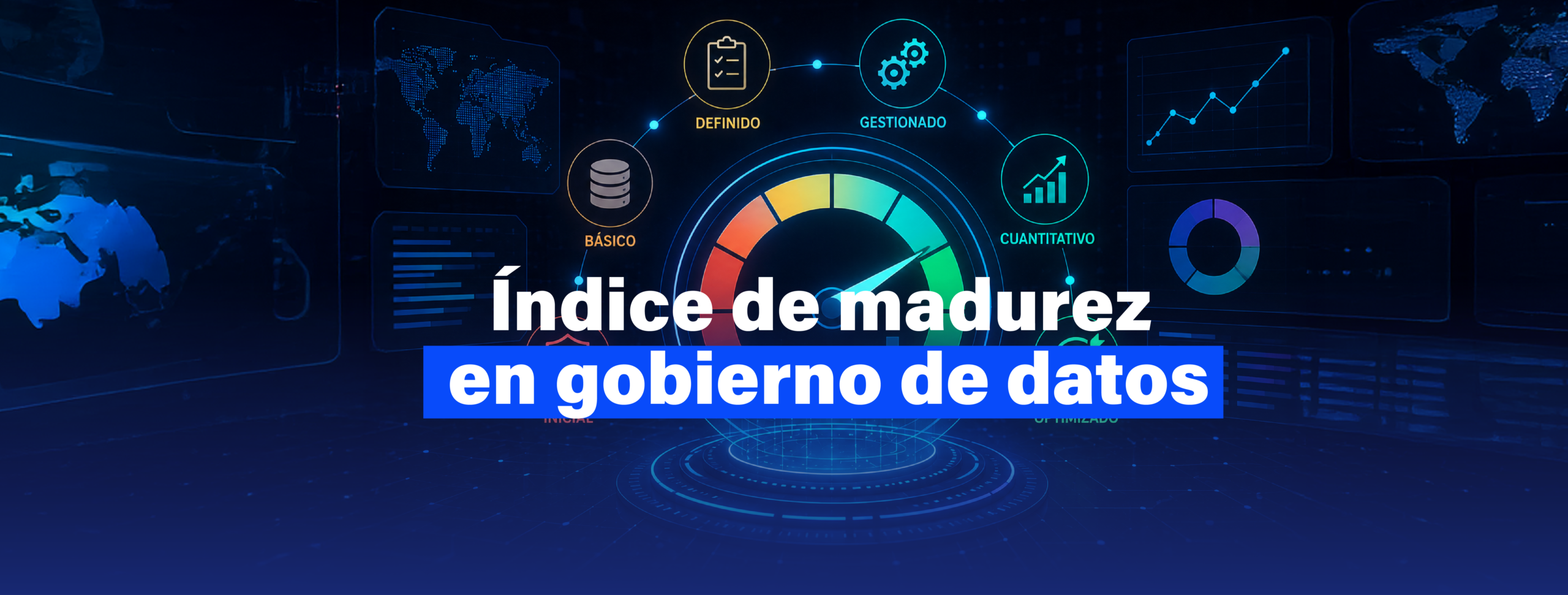
One of its most relevant indicators is that the average maturity index reached only 34.6 out of 100, reflecting that most organizations are still in early stages of development.
In this article, we present the main findings of our study and analyze what they reveal about the current state of data governance in Argentina. We also identify the gaps that most significantly impact the ability to scale AI, comply with regulations, and reduce operational risks. Furthermore, we share a practical action plan to advance an evolving roadmap.
Importance of understanding data governance maturity
As regulatory pressure increases, organizations must respond to increasingly complex requirements related to privacy, data protection, auditing, traceability, and risk management.
At the same time, the expansion of artificial intelligence is raising the bar for data quality, availability, and governance. Models may become increasingly sophisticated, but If they operate on inconsistent or poorly governed information, the risks increase instead of decrease..
Added to this is a third factor: the growth of operational complexity. Organizations manage more sources of information, more applications, and more digital processes than ever before.
Therefore, data governance maturity can no longer be analyzed solely from a compliance perspective. a solid foundation of data governance, It is extremely difficult to scale AI initiatives, sustain regulatory processes efficiently, or make reliable, evidence-based decisions.

What the report measures: six key dimensions
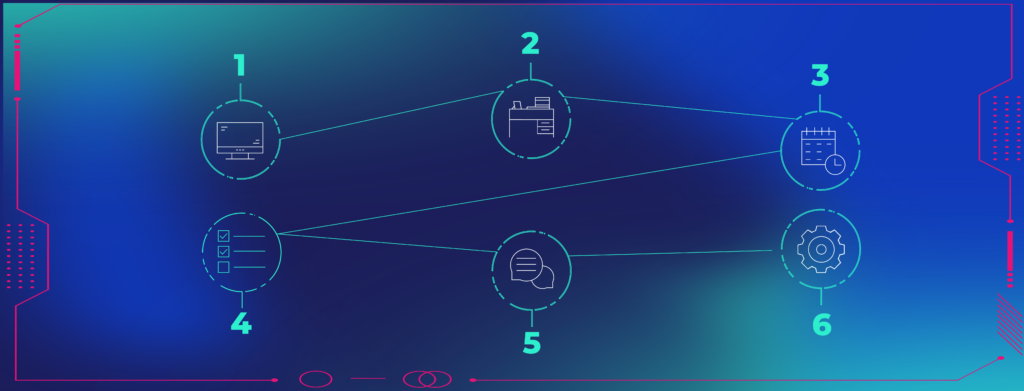
The study evaluates six dimensions that allow measuring an organization's actual execution capacity in data governance.
1. Leadership and governance. It analyzes the existence of formal managers, decision-making structures, and mechanisms for managing the data strategy.
2. Structure and roles. Evaluate the presence of dedicated teams, formalized roles, and operating models that allow a data governance program to be sustained over time.
3. Technology and artificial intelligence. It measures the use of data catalog tools, technological capabilities, and adoption of AI applied to data governance.
4. Regulatory compliance. It analyzes the level of implementation of policies, regulatory frameworks, and privacy and data protection mechanisms.
5. Culture and training. Evaluate the frequency of training, training programs, and building a data culture.
6. Investment and resources. It measures budgets, financing capacity, and resources allocated to sustain the function.
The combination of these six dimensions makes it possible to identify not only the stated intention of organizations, but also their effective capacity to execute a data governance strategy.
Key findings in Argentina: what's happening in practice
The results show a transition scenario where, on the one hand, there is consensus regarding the strategic importance of data governance, and on the other hand, significant implementation gaps persist.
The most striking finding is that 77% of the organizations are at the "Initial" or "Developing" maturity levels. In other words, Most are still building the basic capabilities needed to govern their data systematically..
Some indicators that illustrate this situation:
- 43 % does not have any dedicated data governance team.
- 30 % states that no one formally governs the data.
- 26 % is still defining who will be responsible for governance.
- 55 % of those who responded to the corresponding section do not have a CDO.
- 67 % does not use data catalog tools.
- 69 % does not use AI in data governance processes.
- 76 % allocates less than $50,000 annually to privacy and data protection.
These numbers point to a clear conclusion: the main challenge is not technological. The biggest gap lies in defining the structures, responsibilities, capabilities, and management mechanisms that will allow transforming data governance into a sustainable operational function.

Critical gaps: where most organizations get stuck
Our study identifies four major areas where the most frequent obstacles are concentrated.
Lack of formal leadership
The 56 % of organizations does not have a consolidated data governance structure, and without clear responsibilities it is difficult to set priorities, allocate resources or drive organizational changes.
Insufficient or non-existent equipment
The 43 % does not have dedicated teams and in many cases, responsibilities fall informally on technology, security or legal areas, hindering the continuity of initiatives.
Low investment
The investment and resources dimension scored only 19.6 out of 100, the lowest score in the study. The lack of funding makes it difficult to incorporate tools, develop internal capacities, or build sustainable improvement programs.
Limited technological adoption
The low use of data catalogs and AI shows that many organizations are still solving basic organizational and management challenges.
These gaps have concrete consequences: they increase operational risks, hinder regulatory compliance, and delay advanced analytics and artificial intelligence initiatives.
What distinguishes the most mature organizations?
The study also makes it possible to identify common patterns among organizations that achieve defined or optimized levels in data governance.
The first difference is the existence of formal leadership. Organizations with a dedicated CDO achieve an average maturity index of 71 out of 100, while those without this role barely reach 22 out of 100.
The second one resides in the investment. Those who allocate more than USD 100,000 annually to these initiatives reach an average maturity score of 67 points, compared to 28 points for those who invest less than USD 50,000.
The third difference lies in the adoption technological. Organizations that use AI in data governance achieve an average score of 58 out of 100, compared to 24 out of 100 for those that do not yet use it.
The study shows that technology appears after structure, leadership, budget, and culture have been developed, indicating that it is not a starting point but a consequence of maturity.

Action plan: how to move forward without slowing down the business
Experience shows that organizations can generate visible progress without needing to drive massive transformations.
A progressive action plan could be developed as follows:
First 30 days
- Designate a formal data controller.
- Identify critical information domains and assets.
- Conduct a risk and gap analysis.
- Identify two or three high-impact quick wins.
First 60 days
- Formalize roles and responsibilities.
- Create a data governance committee.
- Prioritize minimum privacy and management policies.
- Start a structured training program.
First 90 days
- Define tracking metrics.
- Incorporate quality and compliance indicators.
- Evaluate data catalog tools.
- Extend the model to new business domains.
The goal is to generate an operational capacity that allows scale data-driven decisions,
How to use our benchmark in your organization
The main value of a benchmark is in identifying priorities.
Comparing against the market allows you to understand where the biggest gaps are, prioritize high-impact initiatives, justify investments, align objectives (between business, technology, security and compliance), and build evidence-based roadmaps.
Organizations that use maturity benchmarks often accelerate decision-making because they transform subjective perceptions into concrete diagnoses. This is your opportunity to do so.
Checklist: Are you in line with the market average?
The results of our study allow us to identify some common signs in organizations that are still in early stages of maturity:
There is no formal data governance structure. If there is still no clear person in charge or governance remains "under definition", there is a high probability that the organization is operating below expected maturity levels.
There are no dedicated teams. When data governance relies exclusively on piecemeal efforts from other areas, it becomes difficult to sustain long-term initiatives.
There is no data catalog. The lack of cataloging tools limits visibility and hinders the efficient management of information assets.
Training is reactive. If training only occurs in response to incidents or regulatory requirements, capacity building will be slow and inconsistent.
There are no systematic maturity metrics. Without indicators, it is difficult to demonstrate progress, justify investments, or identify opportunities for improvement.
If your organization identifies with three or more of these points, it is likely within the risk zone observed in most of the organizations in the study, indicating that now is the right time to move forward with a robust strategy. data governance.
Next step: Download the report and transform the findings into a roadmap
Benchmarking offers a concrete opportunity to understand where your organization is and what capabilities it needs to develop to move forward.
Schedule a work session, to analyze the results, identify priority gaps and build a realistic roadmap aligned with business objectives, regulatory needs and Data & AI initiatives.
At IT Patagonia we work with organizations in highly regulated sectors to transform maturity diagnoses into concrete evolution plans.


